
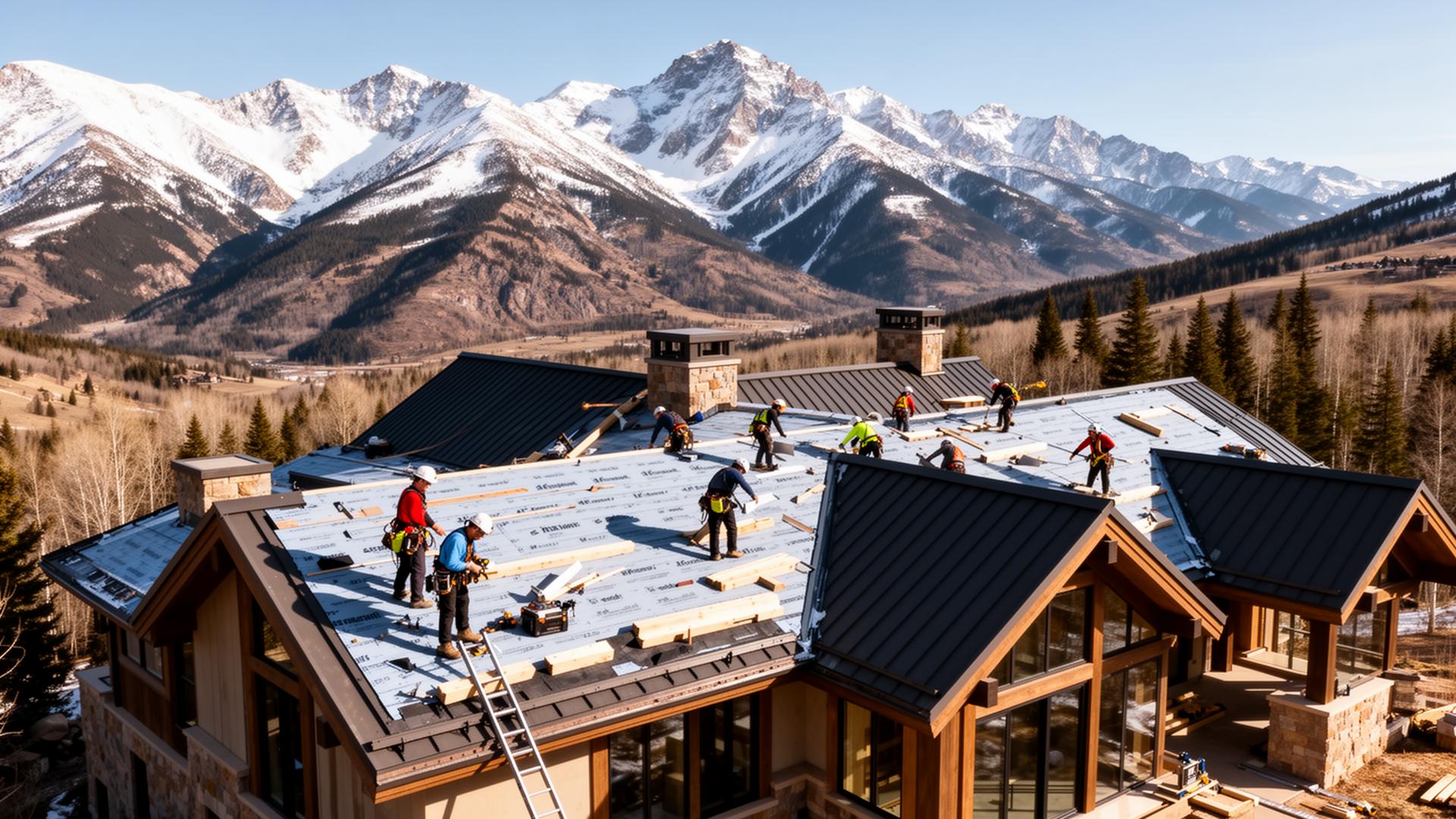
Whether you're building a luxury custom home in Aspen, planning a high-end remodel, or adding a garage to your property in Vail, understanding the permitting process and structural requirements is essential before breaking ground. This guide covers what homeowners and developers need to know about building permits in Aspen, Colorado and snow load requirements across the Roaring Fork and Vail Valleys.
Building Permits in Aspen & Pitkin County
Aspen and Pitkin County enforce some of the most rigorous building regulations in Colorado. Every new construction project, significant remodel, and most additions require a building permit — and the process involves more than just a standard plan review.
What Requires a Building Permit in Aspen?
- New home construction — all single-family, multi-family, and commercial structures
- Structural remodels — any project involving load-bearing walls, foundations, or roof modifications
- Kitchen and bathroom remodels — when plumbing, electrical, or structural work is involved
- Additions and expansions — including ADUs, garages, and bump-outs
- Roofing replacements — when changing materials or modifying structure
- Mechanical systems — HVAC installation, electrical panel upgrades, plumbing modifications
- Decks, retaining walls, and driveways — depending on size and location
Projects that typically do not require a permit include interior painting, flooring replacement (without subfloor work), cabinet refacing, and minor fixture replacements. When in doubt, consult with your contractor or the Pitkin County Building Department before starting work.
The Pitkin County Permitting Process
The permitting process in Pitkin County involves several layers beyond a standard building permit application:
For larger projects, a meeting with county planning staff to review scope, zoning compliance, and required studies.
Properties in Aspen's historic districts require approval from the Historic Preservation Commission. Even non-historic properties may face design review in certain zones.
Complete construction documents including architectural plans, structural engineering, mechanical plans, energy code compliance, and site drainage plans.
County staff reviews plans for code compliance. Standard review takes 4–8 weeks; complex projects may require multiple review cycles.
Once approved, the permit is issued with conditions. Construction must begin within a specified timeframe and pass scheduled inspections.
Multiple inspections throughout construction — foundation, framing, mechanical, insulation, final. Certificate of Occupancy (CO) issued upon passing final inspection.
Permit Fees in Aspen & Pitkin County
Building permit fees are calculated based on project valuation using the International Code Council (ICC) fee schedule. Typical fee ranges for residential projects in Pitkin County:
| Project Type | Typical Permit Fees | Review Timeline |
|---|---|---|
| Minor Remodel | $2,000 – $5,000 | 2 – 4 weeks |
| Major Remodel | $5,000 – $15,000 | 4 – 8 weeks |
| Addition / Expansion | $8,000 – $25,000 | 6 – 10 weeks |
| New Custom Home | $15,000 – $50,000+ | 6 – 16 weeks |
Additional fees may apply for energy code review, environmental impact studies, geotechnical reports, and design review (HPC) applications. Your builder should account for all permit-related costs in the project budget.
Building Permits in Vail & Eagle County
Vail, Edwards, Avon, and Eagle fall under Eagle County building jurisdiction. While Eagle County adopts the same International Building Code (IBC) as Pitkin County, the process is generally more streamlined:
- Faster review times — typical permits are reviewed in 3 to 6 weeks
- Lower fee structures — generally 15–25% lower than Pitkin County
- Less restrictive design review — except within the Town of Vail, which has its own Design Review Board
- Same structural requirements — snow loads, wind loads, and seismic requirements remain equally rigorous
The Town of Vail operates its own building department with separate design guidelines, particularly for properties in the commercial core and residential neighborhoods. Projects in Edwards and Avon typically go through Eagle County directly.
Snow Load Requirements in Colorado Mountain Construction
Snow load engineering is one of the most critical — and most misunderstood — aspects of building in Colorado's mountain communities. Underestimating snow loads can lead to structural failure, roof collapse, and catastrophic property damage. Overengineering adds unnecessary cost. Getting it right requires site-specific analysis by an experienced structural engineer working with a builder who understands mountain conditions.
What Is a Snow Load?
A snow load is the downward force that accumulated snow exerts on a roof or structure, measured in pounds per square foot (psf). Colorado building codes specify ground snow loads — the weight of snow on the ground at a given location — and structural engineers use these values along with roof geometry, exposure, and thermal factors to calculate the actual design roof snow load.
Ground Snow Loads by Community
| Community | Elevation | Ground Snow Load (psf) | Avg. Annual Snowfall |
|---|---|---|---|
| Aspen | 7,908 ft | 80 – 150+ psf | 170+ inches |
| Snowmass Village | 8,209 ft | 90 – 160+ psf | 200+ inches |
| Vail | 8,150 ft | 80 – 130 psf | 180+ inches |
| Beaver Creek / Avon | 7,400 ft | 70 – 110 psf | 150+ inches |
| Edwards | 7,200 ft | 60 – 100 psf | 100+ inches |
| Basalt | 6,611 ft | 50 – 80 psf | 80+ inches |
| Glenwood Springs | 5,761 ft | 40 – 60 psf | 60+ inches |
Note: These are approximate ranges. Actual design snow loads are site-specific and must be determined by a licensed structural engineer based on elevation, exposure, roof slope, and local code requirements.
How Snow Loads Affect Your Build
Structural Framing
Higher snow loads require larger beams, closer rafter spacing, engineered trusses, and steel reinforcement. This directly impacts framing costs — often adding 10–20% compared to Front Range construction.
Roof Design
Steep roof pitches shed snow more effectively but create different load patterns. Valleys, dormers, and multi-level roofs create drift zones where snow accumulates — requiring localized reinforcement.
Foundation Requirements
Snow loads transfer through the structure to the foundation. Higher design loads may require deeper footings, larger foundation walls, or engineered slab systems — especially on hillside sites.
Insurance & Liability
Structures designed below code-required snow loads may face insurance exclusions. Proper engineering documentation protects both the homeowner and the builder from liability.
Roof Snow Management Systems
Beyond structural engineering, mountain homes require active snow management to protect occupants, landscaping, and adjacent structures:
- Snow guards and snow fences — prevent sudden snow slides from metal and slate roofs, protecting walkways and entries
- Heat trace systems — electric heating cables in gutters and valleys prevent ice dams that cause water intrusion
- Engineered drainage — proper gutter sizing and downspout routing for high-volume snowmelt
- Roof access planning — safe access points for manual snow removal when loads approach design capacity
At Bulldog Construction, snow management is integrated into the design phase — not treated as an afterthought. Our roofing team specifies systems matched to each project's snow load profile and roof geometry.
Permitting in Garfield County — Glenwood Springs & Carbondale
Glenwood Springs and Carbondale fall under Garfield County jurisdiction. The permitting process is generally the most streamlined of the three counties in the Roaring Fork Valley:
- Review times of 2 to 4 weeks for most residential projects
- Lower permit fees compared to Pitkin and Eagle Counties
- Less restrictive design review requirements
- Same IBC structural and energy code requirements
For homeowners considering construction in the Roaring Fork Valley, Garfield County offers a more accessible entry point from a regulatory perspective while maintaining the same quality and safety standards required throughout Colorado.
How Bulldog Construction Handles Permitting & Structural Engineering
Navigating the permitting landscape across Pitkin, Eagle, and Garfield Counties is a core competency — not an afterthought — for our team. Through our design-build process, we manage:
- Complete permit applications — from initial submissions through final CO
- Structural engineering coordination — working with licensed engineers who specialize in mountain construction
- Design review navigation — for projects in Aspen's historic districts and Vail's design review zones
- Multi-jurisdiction experience — we build across all three counties and understand each jurisdiction's requirements
- Inspection scheduling — managing the inspection sequence to keep your project moving without delays
Whether you're planning a new custom home, a major addition, or a kitchen remodel, we handle the regulatory complexity so you can focus on the vision.
Planning a Project in Aspen, Vail, or the Roaring Fork Valley?
Our team handles permitting, structural engineering, and construction — so you don't have to navigate the process alone.